The full dissertation, adapted for reading on this website. Original wording, figures and table are retained; page layout differs from the Word document.
Developing tumor-targeting Salmonella strain optimised for utilisation of succinate
Authors and affiliations:
Chau Tran¹, Paul Dyson¹*
¹ Institute of Life Science, School of Medicine, Swansea University, Singleton Park, Swansea SA2 8PP, UK
Corresponding author: Paul Dyson, Institute of Life Science, School of Medicine, Swansea University, Singleton Park, Swansea SA2 8PP. Email: p.j.dyson@swansea.ac.uk
Keywords:
Succinate dehydrogenase, oncometabolites, tumour-targeting bacteria, Salmonella Typhimurium, metabolic engineering
Word count: 6734
ABSTRACT
Succinate, a central metabolite of the tricarboxylic acid (TCA) cycle, has emerged as an oncometabolite that promotes tumour progression through pseudohypoxia, epigenetic modification, and immune signalling. In succinate dehydrogenase (SDH)-deficient cancers, succinate accumulates to abnormally high levels, creating both a driver of oncogenesis and a potential metabolic vulnerability. One proposed therapeutic strategy is to engineer Salmonella Typhimurium SL7207, a facultative anaerobic bacterium with tumour-colonising ability, to act as a metabolic sink and deplete extracellular succinate within the tumour microenvironment.This project aimed to enhance succinate utilisation by introducing the succinate transporter dctA and the sdh operon into plasmid vectors. The dctA gene (1,287 bp) and the sdh operon (~3.5 kb) were amplified from Salmonella Typhimurium genomic DNA. Restriction–ligation cloning into low-copy (pLF305) and high-copy (pUC18) vectors was attempted. Clones were screened by colony PCR, restriction digestion, and sequencing. The dctA gene was successfully cloned into pLF305. In contrast, cloning of the sdh operon was unsuccessful despite successful PCR amplification. Restriction digests of candidate plasmids frequently showed unexpected patterns, and sequencing revealed insertion of unrelated genomic fragments. Analysis suggested that incomplete digestion and operon instability due to recombination in JM109 cells were the most probable causes. While full reconstruction of the succinate catabolic pathway was not achieved, the successful dctA cloning provides a foundation for future engineering. The difficulties with sdh highlight the need for seamless cloning methods, recombination-deficient hosts, and synthetic DNA strategies. These findings refine the methodological roadmap for developing Salmonella-based metabolic interventions in oncology.
INTRODUCTION
Cancer has long been recognised as a disease of dysregulated cell growth and genomic instability, but over the past two decades, it has also become increasingly understood as a disease of altered metabolism. Tumour cells undergo substantial metabolic reprogramming to support rapid proliferation, survival in hostile microenvironments, and resistance to therapeutic interventions. While the Warburg effect, which is characterised by a preference for aerobic glycolysis over oxidative phosphorylation, has dominated the historical understanding of cancer metabolism, newer insights have revealed the critical importance of specific metabolic intermediates known as oncometabolites. These small molecules accumulate to abnormally high concentrations in certain tumour types and contribute directly to oncogenic signalling, epigenetic regulation, and immune modulation. Among the most extensively studied oncometabolites is succinate, a key intermediate of the tricarboxylic acid (TCA) cycle (Murphy & O’Neill, 2018).
Succinate plays a central role in mitochondrial energy metabolism, where it is oxidised to fumarate by succinate dehydrogenase (SDH), a complex that also functions as Complex II of the mitochondrial electron transport chain. This enzyme complex is composed of four subunits (SDHA, SDHB, SDHC, and SDHD), and it bridges carbon flux in the TCA cycle with electron transfer to ubiquinone in the respiratory chain. In normal cells, the intracellular concentration of succinate is tightly regulated through this oxidative process. However, in a subset of cancers, this regulation breaks down. Mutations, deletions, or epigenetic silencing of SDH subunit genes lead to loss of SDH function and the intracellular accumulation of succinate to pathological levels (Dalla Pozza et al., 2020). These mutations have been observed in several rare but clinically significant cancers, most notably gastrointestinal stromal tumours (GISTs), paragangliomas, and some forms of renal cell carcinoma(Powers et al., 2018). In these tumours, succinate is not a metabolic bystander; it becomes a driver of malignancy.
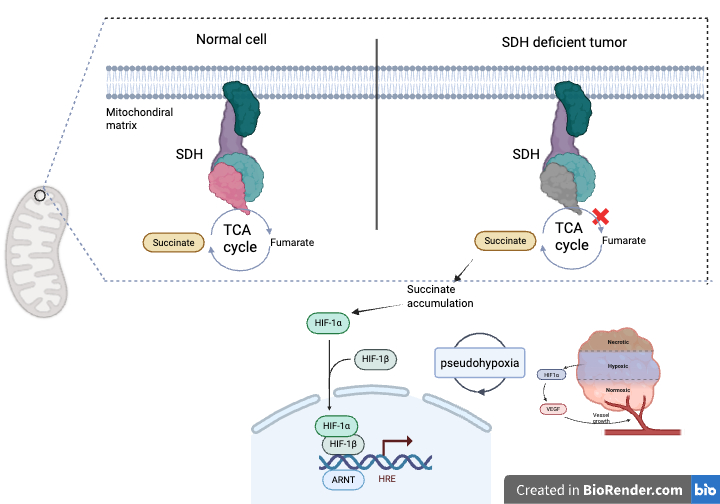
Mechanistically, the oncogenic effects of succinate are pleiotropic and multifaceted. A major pathway through which succinate promotes tumorigenesis is by interfering with cellular oxygen sensing. Succinate is a potent competitive inhibitor of α-ketoglutarate (α-KG)-dependent dioxygenases, a broad enzyme class that includes prolyl hydroxylases responsible for degrading hypoxia-inducible factor 1α (HIF1α). Under normal oxygen conditions, these enzymes hydroxylate HIF1α, targeting it for proteasomal degradation. However, when succinate accumulates, it prevents hydroxylation, stabilising HIF1α even in normoxic tissues (Figure 1). This aberrant stabilisation leads to activation of a wide array of hypoxia-responsive genes involved in angiogenesis (e.g., VEGF), glycolysis, erythropoiesis, and cellular survival, which is a state referred to as pseudohypoxia(Koivunen et al., 2007)(Hewitson et al., 2007). These changes contribute to an aggressive, therapy-resistant tumour phenotype with enhanced vascularisation, metabolic flexibility, and reduced apoptotic sensitivity.
Beyond pseudohypoxic signalling, succinate also affects epigenetic regulation. It inhibits other α-KG-dependent dioxygenases, including the Ten-Eleven Translocation (TET) family of DNA demethylases and Jumonji-C (JmjC) domain-containing histone demethylases. Inhibition of these enzymes results in hypermethylation of DNA and histones, leading to the silencing of tumour suppressor genes and altered transcriptional landscapes that favour oncogenesis(Dalla Pozza et al., 2020)(Nazar et al., 2019). This epigenetic reprogramming has been shown to be stable and heritable, reinforcing malignant phenotypes over time and potentially contributing to therapy resistance and tumour evolution. Importantly, these epigenetic effects extend beyond individual tumour cells, influencing the broader tumour ecosystem.
More recently, succinate has also been recognised as a key immunometabolite that plays important roles in shaping the tumour microenvironment (TME). Succinate can be secreted into the extracellular space, where it acts as a ligand for the G-protein-coupled receptor SUCNR1 (also known as GPR91). SUCNR1 is expressed on a variety of immune and stromal cells, including dendritic cells, macrophages, and endothelial cells. Activation of this receptor modulates inflammatory signalling, angiogenesis, and immune cell activation(Wu et al., 2020)(Xu et al., 2022). For example, succinate has been shown to promote the polarisation of macrophages into tumour-associated macrophages (TAMs) with an immunosuppressive phenotype, which supports tumour growth by suppressing cytotoxic T-cell activity and promoting angiogenesis(J.-Y. Wu et al., 2020). In endothelial cells, SUCNR1 activation enhances vascular remodelling and neovascularisation, contributing to metastasis and therapeutic resistance(Xu et al., 2022).
The case for targeting succinate in cancer is therefore compelling. Succinate accumulation is not a side effect of SDH deficiency; it is a central pathogenic event that disrupts oxygen sensing, epigenetic stability, immune function, and stromal signalling. However, current therapeutic approaches to succinate-driven cancers are limited in scope and efficacy. Existing strategies typically aim to restore SDH function through gene therapy or enzyme replacement, inhibit downstream effectors such as HIF1α, or use α-KG mimetics to competitively relieve dioxygenase inhibition. These approaches are often hindered by issues of specificity, bioavailability, or incomplete reversal of succinate-induced signalling. One underexplored strategy is to directly deplete succinate from the tumour microenvironment, thereby removing the metabolic substrate upon which multiple oncogenic pathways depend. This concept as therapeutic metabolic depletion, represents a shift in focus from blocking pathways to removing their enabling signals.
One innovative way to implement such a strategy is through the use of live, tumour-targeting bacteria. Facultative anaerobic bacteria, particularly Salmonella enterica serovar Typhimurium, have long been investigated for their natural propensity to colonise solid tumours. The tumour-specific accumulation of Salmonella is attributed to the unique characteristics of the TME, including hypoxia, necrosis, immune suppression, and leaky vasculaturem(Hoffman, 2016)(McCarthy, 2006). These conditions favour bacterial survival and replication while limiting clearance by the immune system. Over the past two decades, engineered Salmonella strains have been used as delivery vectors for anti-tumour agents ranging from cytokines and toxins to siRNAs and CRISPR components(Williams et al., 2024) (Williams et al., 2024). However, a critical and underutilised aspect of this strategy is the alignment or misalignment between bacterial metabolism and the available nutrients within the TME.
In SDH-deficient tumours, where succinate is abundant, a bacterium capable of efficiently consuming succinate could act as a “metabolic sink,” removing the oncometabolite and thereby interfering with the tumour-supportive pathways it drives. This concept, known as metabolic competition, has been demonstrated in host-pathogen interactions and microbial ecology but has only recently begun to be explored as a therapeutic strategy in cancer. Salmonella Typhimurium is theoretically well-suited for this purpose. It naturally encodes the sdhCDAB operon and dctA transporter required for aerobic succinate catabolism. However, under laboratory and in vivo conditions, wild-type Salmonella exhibits poor growth on succinate due to repression of these pathways by global regulatory networks.
Wenner et al., (2024) recently elucidated the genetic basis for this repression. They identified several key regulatory elements, including the alternative sigma factor RpoS, the iron-sulfur cluster regulator IscR, and the cold-shock domain protein CspC, that inhibit expression of succinate oxidation and transport genes at both transcriptional and post-transcriptional levels. The rationale for this repression likely lies in Salmonella’s adaptation to the fluctuating carbon sources encountered during host infection. Nevertheless, in the context of a succinate-rich tumour, such repression is counterproductive from a therapeutic perspective. By removing these regulatory constraints, Salmonella could be reprogrammed to thrive in the TME while simultaneously depleting succinate.
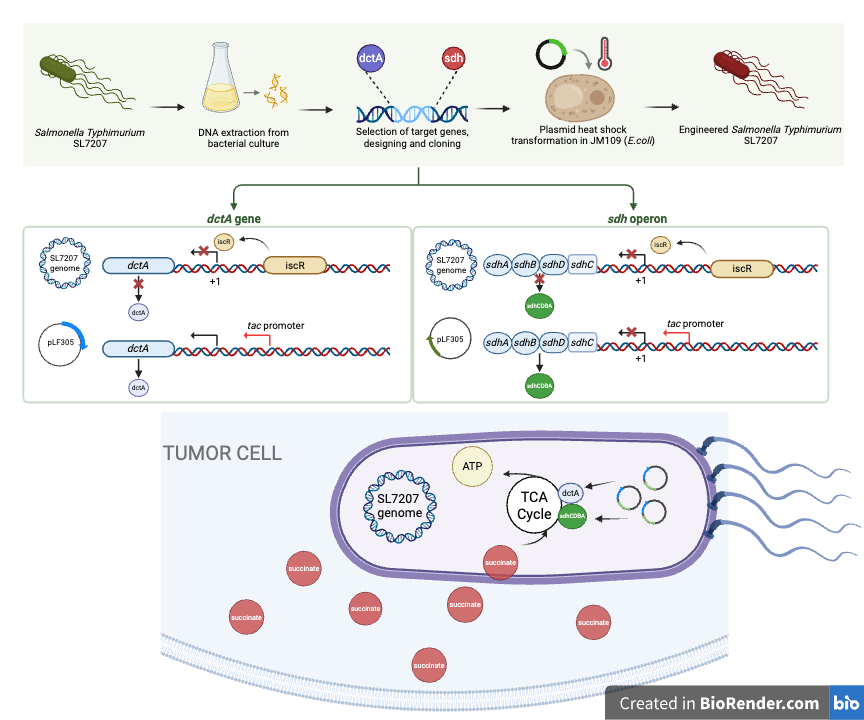
Using targeted genetic engineering, including deletions of iscR and cspC, and overexpression of dctA and sdh, the present study seeks to construct a Salmonella Typhimurium strain with enhanced succinate utilisation. The central hypothesis is that such a strain will demonstrate improved growth on succinate, reduce extracellular succinate levels, and ultimately interfere with succinate-mediated tumour-supportive signalling in SDH-deficient contexts. Unlike conventional microbial cancer therapies that focus on the delivery of a therapeutic payload, this approach introduces a novel mechanism of action based on nutrient competition. It harnesses the dual advantages of Salmonella’s tumour-colonising behaviour and the therapeutic potential of succinate depletion.
The specific objectives of this research are threefold. First, to genetically relieve succinate repression in Salmonella by deleting known regulatory genes and overexpressing transport and catabolic pathways. Second, to quantify succinate consumption and bacterial growth in minimal media supplemented with succinate, comparing engineered strains to wild-type controls. Third, to evaluate the strain’s performance in co-culture models that simulate the tumour microenvironment, particularly under hypoxic and succinate-rich conditions. This study aims to generate foundational data that may support the future development of programmable, metabolism-targeting microbial therapeutics.
Figure 1. Normal and Cancer Cell Metabolism of Succinate. In normal cells (left), succinate dehydrogenase (SDH) within the TCA cycle converts succinate to fumarate, maintaining proper oxygen sensing. In SDH-deficient tumors (right), loss of SDH activity prevents succinate oxidation, leading to succinate accumulation. Excess succinate inhibits α-KG–dependent dioxygenases, stabilising HIF-1α, which dimerises with HIF-1β and activates hypoxia-responsive elements (HREs). This pseudohypoxic signaling upregulates VEGF and promotes angiogenesis, supporting tumor growth and survival.
MATERIALS AND METHODS
All experimental work complied with institutional biosafety regulations and the UK Health and Safety Executive (HSE) guidelines for the safe use of genetically modified organisms. The project involved only bacterial engineering and in vitro assays, with no use of animals or human participants, and posed minimal ethical risk.
Genomic DNA was extracted from Salmonella Typhimurium strain SL7207 using a lysozyme–proteinase K method followed by organic extraction. Briefly, cells from a 5 ml overnight culture were harvested by centrifugation at 5,000 × g for 10 min. The resulting pellet was resuspended in 1 ml TE buffer (10 mM Tris-HCl, 1 mM EDTA, pH 8.0) containing 0.3 M sucrose. To lyse the bacterial cell wall, 33 μl of lysozyme (60 mg/ml) was added, and the suspension was incubated at 37 °C for 1 h. Protein digestion was carried out by adding 70 μl of proteinase K (20 mg/ml) followed by 300 μl of 10% SDS, with incubation at 55 °C for 1 h.
Cellular debris and proteins were removed by extraction with phenol:chloroform:isoamyl alcohol (25:24:1, v/v). An equal volume (2 ml) was added to the lysate, mixed thoroughly, and centrifuged for 15 min at 12,000 × g. The upper aqueous layer was carefully transferred to a fresh tube, and this extraction step was repeated once. A further chloroform extraction (2 ml) was performed to remove residual phenol, followed by centrifugation for 15 min.
Genomic DNA was precipitated by adding 1/10 volume of 3 M sodium acetate and 0.7 volumes of isopropanol, mixing gently, and incubating at room temperature for 5 min. DNA was pelleted by centrifugation at 12,000 × g for 15 min, washed with 500 μl of 70% ethanol, and centrifuged again for 15 min. After discarding the supernatant, the pellet was air-dried for 10 min and resuspended in 100 μl of nuclease-free water.
Concentration and purity were determined using a NanoDrop spectrophotometer by measuring absorbance at 260 nm and 280 nm; samples with an A260/280 ratio between 1.8 and 2.0 were considered suitable for downstream applications.
Primer Design
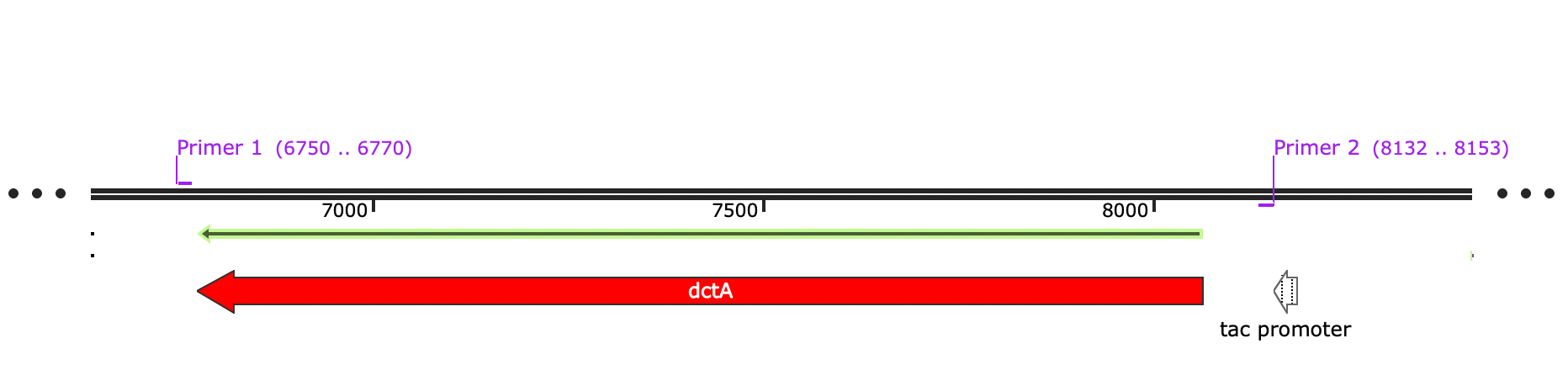
Primers were designed using NetPrimer (Premier Biosoft) and synthesised commercially, based on the published S.Typhimurium genome sequence SL1344. To drive expression of the cloned genes, the tac promoter sequence (TTGACAATTAATCATCGGCTCGTATAATG) was incorporated immediately upstream of the 5′ end of the forward primers, ensuring that the resulting amplicons carried their own transcriptional control element. Restriction enzyme recognition sites were appended to the 5′ termini of both primers to allow directional cloning into expression vectors. In addition, a short 4–6 bp “clamp” of non-specific nucleotides was placed upstream of each restriction site to improve enzyme accessibility and enhance digestion efficiency (Table 1).
Targets
dctA gene (1287 bp): The dctA gene, including its upstream promoter sequence, was amplified using a single pair of primers.
Forward primer incorporated the native promoter sequence.
Restriction sites (HindIII) selected to enable insertion into vector multiple cloning site.
Full sdh operon (~3 kb): The operon was amplified by Nested PCR using two pairs of primers. The outer primer set (doesn’t contain tac promoter sequence) generated the initial long amplicon, while the inner primers (containing SphI restriction sites) were used in a second PCR to increase specificity and to introduce cloning sites at the termini. Genomic DNA and long amplicons obtained from the first reaction were both employed as templates for the nested approach. Other supplement primers were designed for optimisation of sdh operon amplification (Table 1).
sdh operon fragments: The operon was divided into two overlapping fragments (designated “left” and “right”)
Left-hand (LH) fragment (~1.5 kb): amplified with reverse primer containing SgrAI site and forward primer containing SphI site.
Right-hand (RH) fragment (~2 kb): amplified with forward primer containing SgrAI site and forward primer containing SphI site.
Table 1. Primers used to amplify target genes: dctA, sdh operon, sdh LH, sdh RH and other internal control primers
Gene name | Primer name | Sequence | Length |
dctA | dctA F | 5’ – TTG AAG CTT TTG ACA ATT AAT CAT CGG CTC GTA TAA TGG CAT TTC TGT CAT GTT GTG TGG – 3’ | 60 |
sdh | dctA R | 5’ – CTA AAG CTT AGG GAC TAC GGG CAT AAG TGG - 3’ | 30 |
| sdh F | 5’ – ATC GCA TGC TTG ACA ATT AAT CAT CGG CTC GTA TAA TGA CCG GAG GAA GGA AAT CCC G - 3’ | 58 |
| sdh R | 5’ – CTA GCA TGC GTA CGT CGC CAT CCG GCA AC – 3’ | 29 |
| sdh operon right long F | 5’ – GCA CTG TGC ATC GAA ACC GGT GAA GTG G – 3’ | 28 |
| sdh operon left long R | 5’ – AAC TGC CAC ATT TCC ATG TCC TGC ACC G – 3’ | 28 |
| sdh left R | 5’ – CAT GGA TCC GCT TCA AAG GTC AGT TCG CCG CTC GTG G – 3’ | 37 |
| sdh right F | 5’ – TTC GGA TCC CTG GAC CGG TTT CTT CTC ATC GGC CTT CAC C – 3’ | 40 |
| Left sdh (SgrAI | 5’ – ACT GCA TGC CTG CCA CAT TTC CAT GTC CTG C – 3’ | 31 |
| Right sdh (SgrAI) | 5’ – TAT GCA TGC GGT GAA GTG GTG TAC TTC AAA GCC – 3’ | 33 |
PCR Conditions
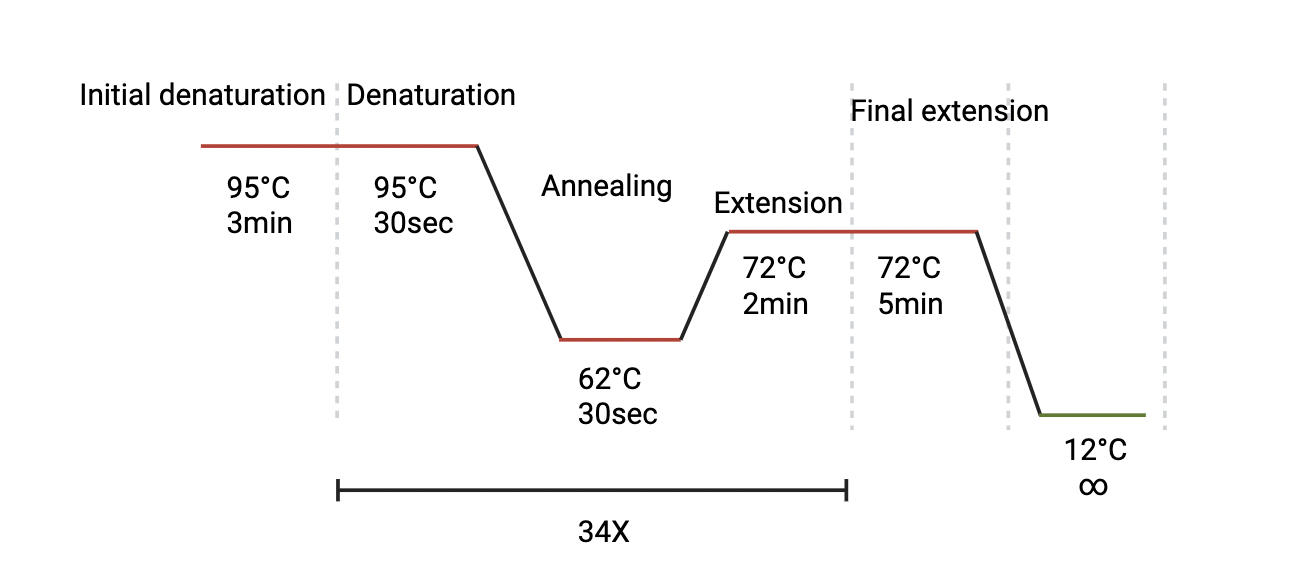
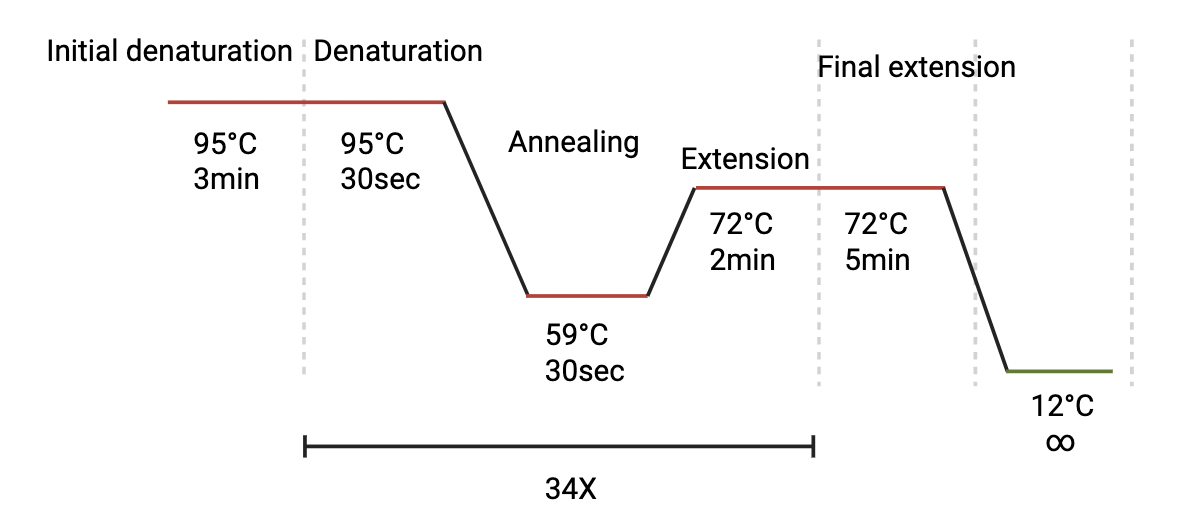
PCR reactions were performed using Q5® Reaction Buffer Pack, Deoxynucleotide (dNTP) Solution Mix, Q5® High GC Enhancer, Q5® High-Fidelity 2X Master Mix, LongAmp® Hot Start Taq 2X Master Mix (New England Biolabs) under standard conditions with specific cycling conditions: (Figure 2). PCR products were analysed on 1% agarose gels, purified using a PCR purification kit or gel extraction kit, and quantified by NanoDrop.
Figure 2. PCR cycle for dctA amplification (A) and sdh amplification (B)
Restriction Digestion and Ligation
Purified PCR amplicons and plasmid backbones were digested with the appropriate restriction enzyme pairs from New England Biolabs (NEB), selected according to the engineered sites introduced during primer design. All digestions were carried out in 1× CutSmart buffer (NEB).
For insert digestion, a 30 µL reaction was prepared containing 15 µL purified PCR product, 3 µL CutSmart buffer, 11 µL nuclease-free water, and 1 µL restriction enzyme.
For plasmid digestion, a 30 µL reaction was set up with 10 µL plasmid DNA, 3 µL CutSmart buffer, 16 µL nuclease-free water, and 1 µL restriction enzyme. Following plasmid digestion, vector backbones were treated with Quick CIP (1 µL, NEB) at 37 °C for 10 min to remove 5′ phosphate groups and thereby prevent self-ligation.
All reactions were incubated at 37 °C for 1–2 h and heat-inactivated at 65 °C for 20 min where applicable. Digested products were subsequently purified by PCR cleanup (for inserts) or agarose gel extraction (for plasmid backbones) prior to ligation.
dctA (1287 bp): PCR products were digested with the chosen enzyme pair HindIII to match the multiple cloning site of pLF305.
sdh LH (~1.5 kb): Nested PCR introduced SphI at the 5′ end and SgrAI at the 3′ end; the fragment was digested with SphI before ligation into pLF305 or pUC18 treated with the same enzymes.
sdh RH (~2 kb): Similarly, primers introduced SphI at the 5′ end and SgrAI at the 3′ end; the RH fragment was digested with SphI + SgrAI and ligated into the vectors.
Full sdh operon (~3.5 kb): Inner nested primers introduced SphI sites at both termini. The amplicon was digested with SphI and cloned into pLF305 or pUC18 digested with the same enzyme. Because both ends were identical, inserts could ligate in either orientation, necessitating downstream orientation screening.
Ligation reactions were carried out using T4 DNA ligase (NEB), with an excess of insert relative to vector. Reactions were incubated overnight at 15 °C and stored on ice until transformation.
Ligation mixtures were transformed into E. coli JM109 competent cells by the heat shock method. Briefly, 2–5 µL of ligation product was added to 50 µL of competent cells, incubated on ice for 30 min, heat shocked at 42 °C for 20 s, and returned to ice for 2 min. SOC medium (450 µL) was added, and cells were recovered at 37 °C for 1 h with shaking.
Cells were plated on LB agar containing appropriate antibiotics: Ampicillin (100 µg/mL) when cultivating pUC18 or Apramycin when working with pFL305, incubated overnight at 37 °C.
Colony screening
Colonies were picked and screened by three complementary approaches:
Colony PCR: Performed using one pair of primers to confirm the presence of the insert.
Restriction Digest Analysis
Plasmid DNA was isolated from overnight cultures using a miniprep kit.
Diagnostic digests were carried out with enzymes cutting asymmetrically within the insert and once in the vector backbone to distinguish insert orientation.
Digested products were resolved on 1% agarose gels.
Nanopore Sequencing
Positive clones identified by PCR and digestion were further verified by sequencing using primers flanking the multiple cloning site.
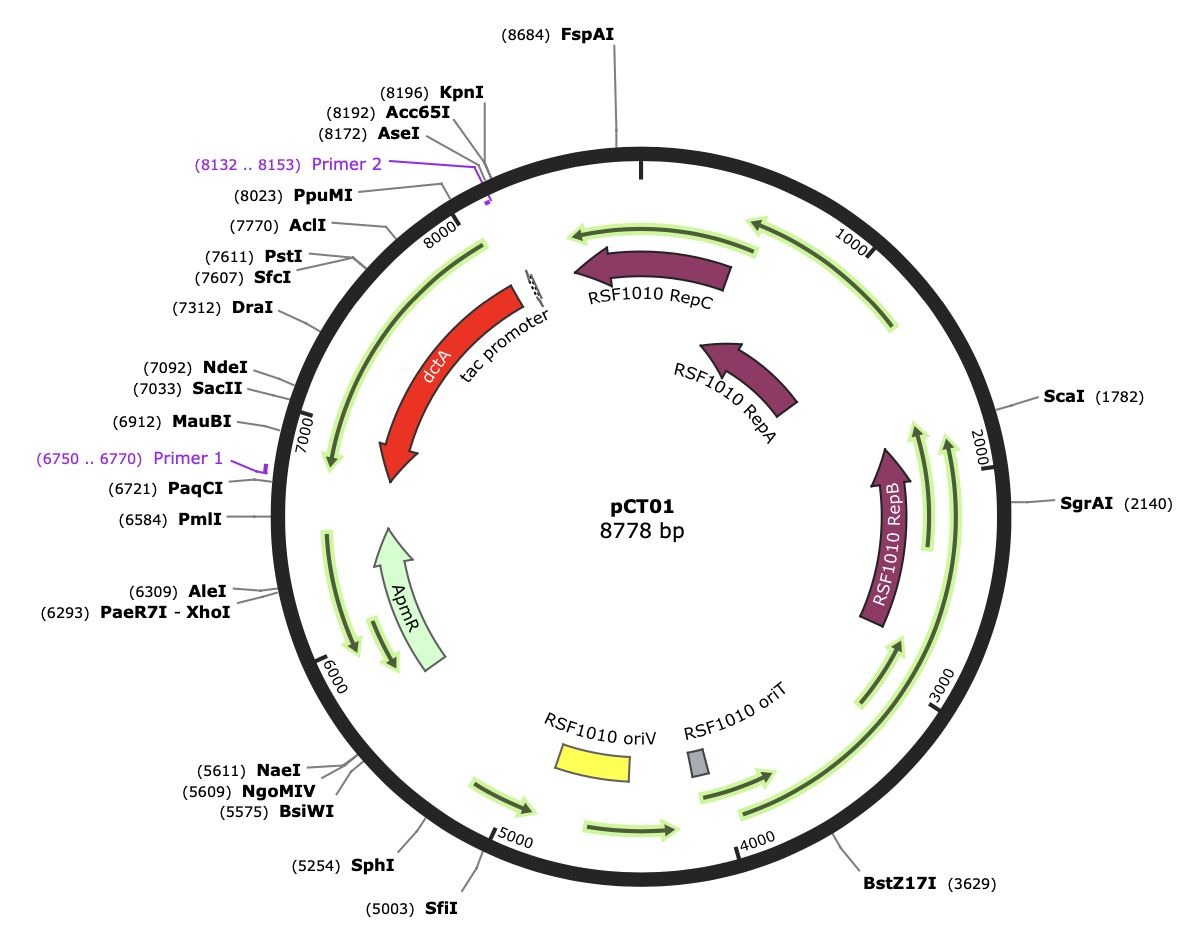
Sequencing confirmed the integrity of the dctA and sdh insert in pLF305 (pCT1 construct) or in pUC18.
RESULTS
4.1 Cloning of dctA into pLF305
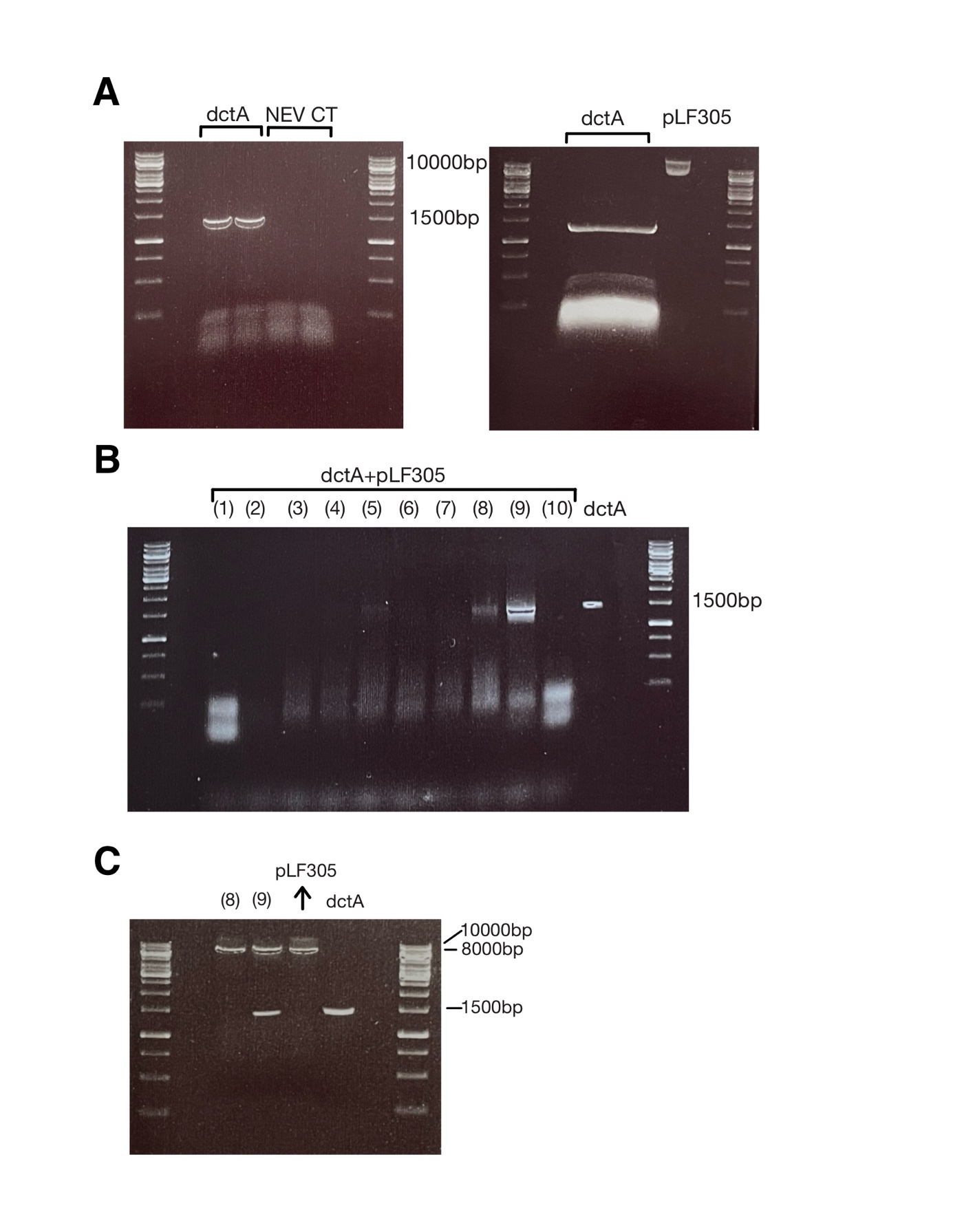
The dctA gene, which encodes the aerobic dicarboxylate transporter in Salmonella Typhimurium, was selected for cloning as an essential component of the succinate uptake system. The gene (1,287 bp) was amplified from the bacterial genome PCR amplification yielded a product of the expected size, which was visualised by agarose gel electrophoresis (Fig. 3A).
The amplicon was digested with HindIII and ligated into the pLF305 plasmid backbone, previously linearised with the same restriction enzyme. Recombinant plasmids were transformed into competent E. coli and screened by colony PCR using the original dctA-specific primers. Colonies carrying the insert produced a 1,287 bp amplicon, confirming the potentially correct plasmid (Fig. 3B). Subsequent plasmid preparation and HindIII restriction digestion further validated the presence and orientation of the dctA insert within the pLF305 vector, as evidenced by distinct bands corresponding to the plasmid backbone and the gene insert. This confirmed successful construction of the dctA expression plasmid, designated pCT1 (Fig. 3C).
To verify construct integrity, plasmid DNA from positive colonies was sequenced using vector-based primers. Sequencing confirmed the correct orientation and sequence identity of dctA, with no evidence of mutations or frame-shifts. These results demonstrate the successful cloning of dctA into pLF305, generating the first component of the engineered system designed for enhanced succinate uptake (Fig. 3D).
Figure 3. Verification of dctA cloning into pLF305. (A) PCR amplification of dctA from the Salmonella Typhimurium SL7207 genome produced a band of the expected size (1,287 bp). (B) Colony PCR screening of transformants identified multiple positive clones carrying the dctA insert. (C) Restriction digestion of candidate plasmids with HindIII released the insert, confirming successful ligation into the vector. (D) NGS sequencing further validated the identity and correct orientation of dctA within pLF305.
4.2 Attempts to Clone the sdh Operon
The sdh operon (sdhCDAB), encoding succinate dehydrogenase, was targeted for cloning as the second component of the engineered succinate utilisation pathway. Due to its relatively large size (~3.5 kb), amplification and cloning posed considerable technical challenges.
4.2.1. Amplification of sdh Operon and Subfragments
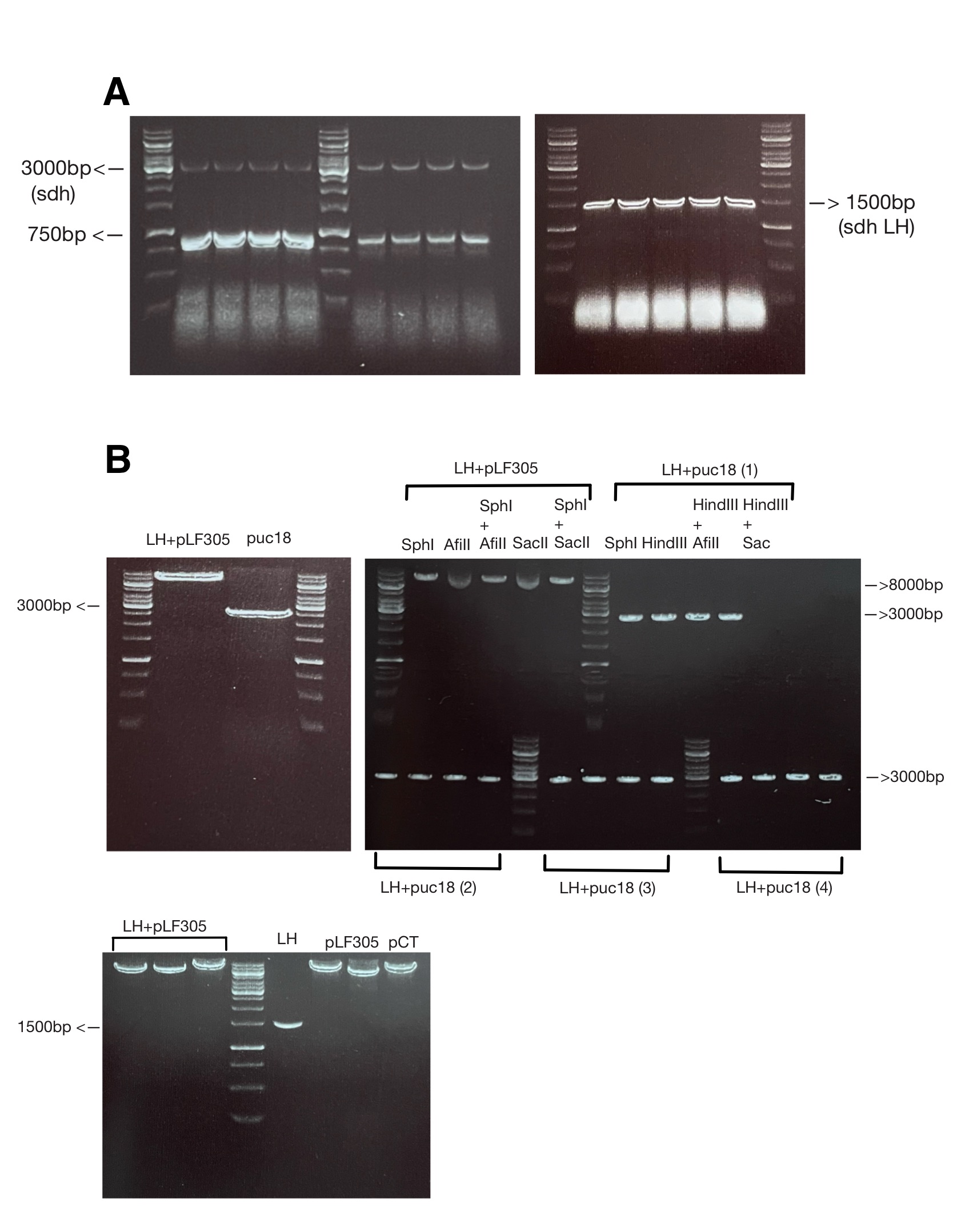
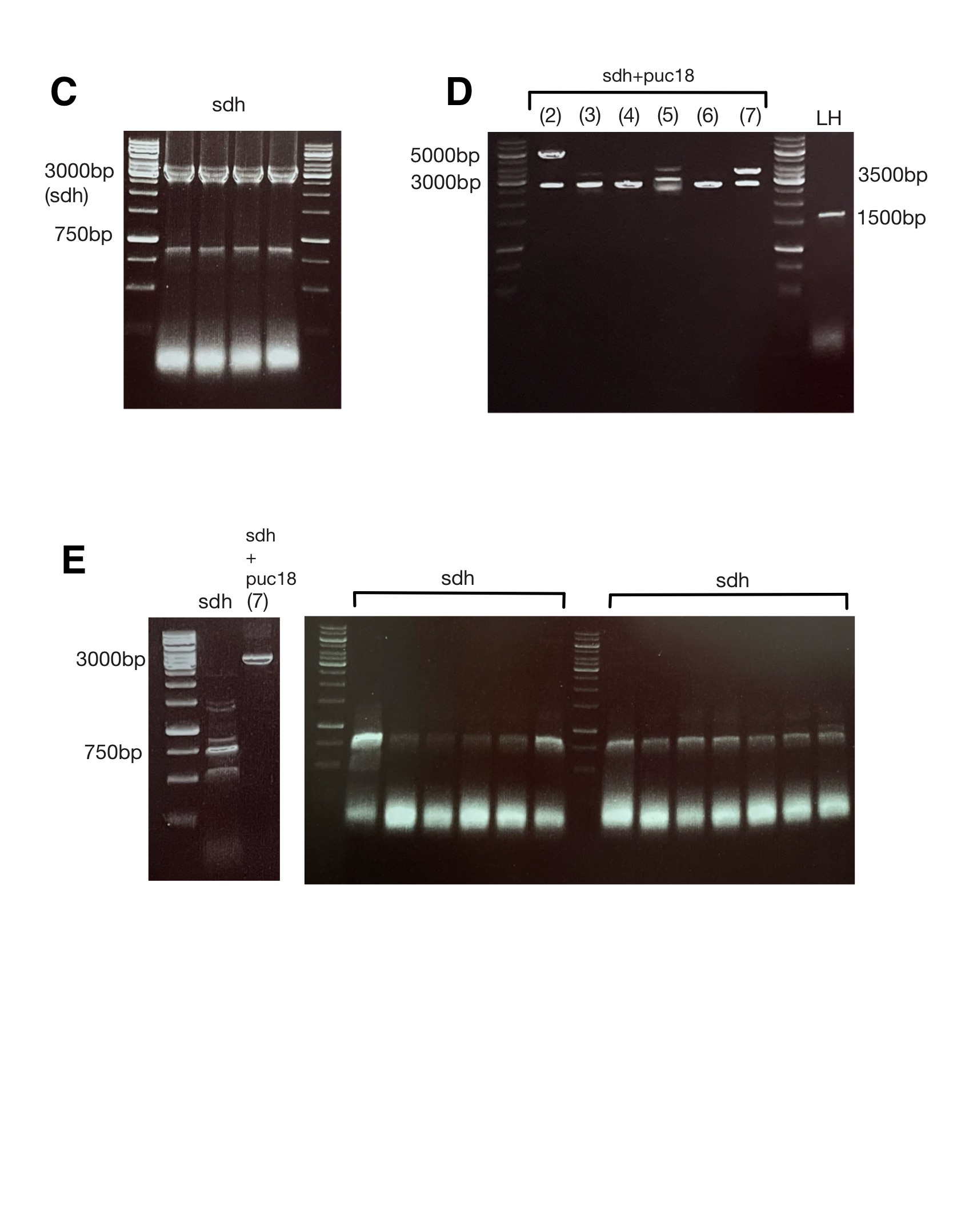
PCR amplification of the sdh operon from Salmonella Typhimurium SL7207 initially yielded weak bands. Optimization of PCR conditions using Q5 High-Fidelity 2X Master Mix with enhancer and a high annealing temperature of 72 °C produced detectable bands at the expected size of ~3 kb for the full operon (Fig. 4A). Under the same optimized conditions, the sdh left-hand (LH) fragment was successfully amplified, producing a distinct band of ~1.5 kb (Fig. 4A). These products were subsequently used for restriction digestion and cloning experiments.
4.2.2. Restriction Digest Analysis of Candidate Plasmids Carrying sdh LH
Candidate plasmids containing sdh LH ligated into pLF305 or pUC18 were analyzed by restriction digestion. Constructs were digested with SphI and a range of other enzymes, including AflII, SacI, and HindIII, to excise the LH insert. However, no bands corresponding to the expected ~1.5 kb insert were observed in any of the clones tested, suggesting either a loss of restriction sites or unsuccessful ligation. Plasmid-only controls, including pLF305 and the positive control plasmid pCT1, produced the expected digestion profiles (Fig. 4B).
4.2.3. Amplification of the Full sdh Operon
Amplification of the complete sdh operon (~3.5 kb) required further optimization. Using LongAmp® Hot Start Taq 2X Master Mix, with an annealing temperature of 60 °C and an extension time of 5 minutes, strong and distinct bands of the expected size were obtained. This confirmed successful amplification of the full-length operon for downstream cloning attempts (Fig. 4C).
4.2.4. Screening of Colonies Carrying Full sdh Inserts
Plasmids extracted from colonies obtained after ligation of the sdh operon into pUC18 were subjected to screening by restriction digestion with SphI and colony PCR using sdh LH-specific primers. Colonies (2)–(7) showed mixed digestion patterns, with colony (7) producing a banding profile suggestive of the presence of an insert. Colony PCR further indicated amplification of a fragment consistent with the LH region, suggesting this colony as a potential positive recombinant (Fig. 4D).
To confirm the presence of the sdh operon in candidate plasmids, PCR screening was performed with sdh-specific primers. However, no amplicons corresponding to the operon or its fragments were detected from these plasmids, indicating that despite promising initial digestion patterns, stable clones containing the intact sdh operon could not be verified (Fig. 4E).
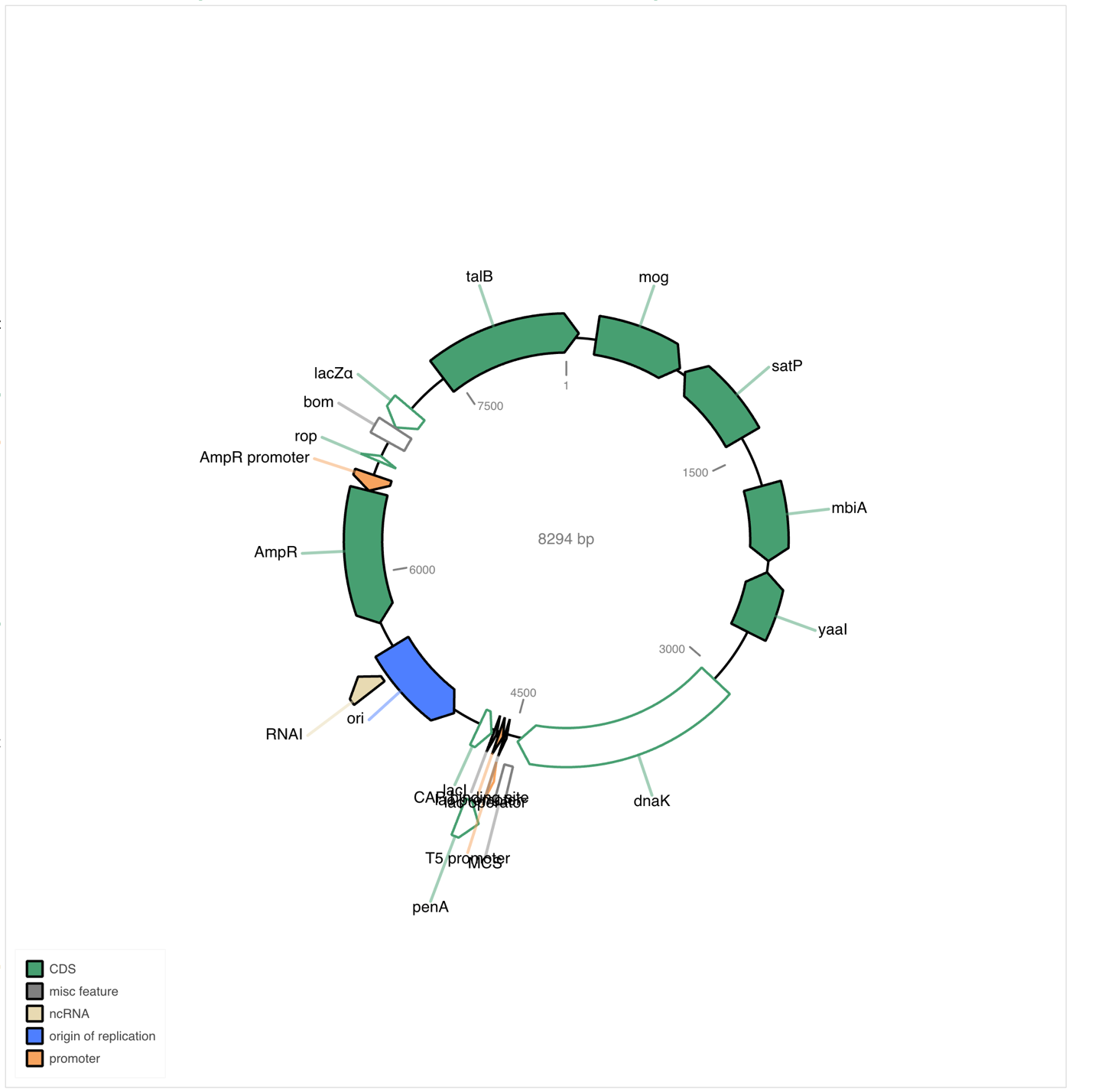
Sequencing of selected plasmids provided further insight into these anomalies. Instead of the intended sdhCDAB operon, the inserts contained larger genomic fragments derived from the E. coli chromosome. Genes identified within these inserts included talB (transaldolase B), mog (DNA methyltransferase), satP (succinate–acetate transporter), yaaI (putative transporter), and dnaK (heat shock protein chaperone). The total size of these inserts was ~5.5 kb, significantly larger than the expected 3.5 kb sdh operon, resulting in plasmids of ~8.3 kb in length when combined with the 2.7 kb pUC18 backbone (Figure 5). These results strongly suggest recombination or repair events occurred during cloning, leading to incorporation of unintended chromosomal fragments rather than the target operon.
Figure 4. (A) Faint sdh bands (~3 kb) were detected after optimization of PCR conditions using Q5 High-Fidelity 2X Master Mix with enhancer at an annealing temperature of 72 °C. The sdh LH fragment (~1.5 kb) was successfully amplified under these conditions and used for subsequent restriction digestion and ligation experiments. (B) Plasmids containing sdh LH cloned into pLF305 or pUC18 were subjected to digestion with SphI and alternative restriction enzymes (AflII, SacI, HindIII). Loss of the expected SphI site was observed, as no sdh LH band could be excised. Negative and vector-only controls included pLF305 and pCT plasmids. (C) Optimized PCR conditions using LongAmp® Hot Start Taq 2X Master Mix, with annealing temperature of 60 °C and extension time of 5 min, resulted in clear amplification of the full-length sdh operon. (D) Plasmid DNA from transformed colonies was analyzed by restriction digestion with SphI and by cloning PCR using primers designed for sdh LH amplification. Colony (7) yielded a banding pattern consistent with the presence of the sdh insert, indicating potential positive recombinants. (E) Plasmids isolated from selected colonies were tested by PCR using sdh-specific primers. No sdh band was amplified, suggesting absence of the insert in these clones.
Figure 5. Sequencing analysis of pUC18–sdh candidate plasmids. Plasmid maps generated from sequencing results revealed that instead of the intended 3.5 kb sdhCDAB operon, candidate clones carried larger genomic fragments (~5.5 kb) derived from the E. coli chromosome. Annotated open reading frames included talB (transaldolase B), mog (DNA methyltransferase), satP (succinate–acetate transporter), yaaI (putative transporter), and dnaK (heat shock protein). The total plasmid size was ~8.3 kb, comprising the 2.7 kb pUC18 backbone and ~5.5 kb insert. These findings indicate that recombination or repair events led to incorporation of unintended chromosomal DNA rather than the target sdh operon.
DISCUSSION
This project investigated the feasibility of engineering Salmonella Typhimurium to exploit succinate accumulation within the tumour microenvironment by cloning two genetic modules: the dicarboxylate transporter gene dctA and the succinate dehydrogenase operon (sdhCDAB). The results were mixed. On the one hand, the dctA gene (1,287 bp) was successfully cloned into pLF305, verified by PCR screening and sequencing, demonstrating the robustness of the cloning workflow for single-gene targets. On the other hand, multiple attempts to clone the sdh operon (~3.5 kb) were unsuccessful, despite optimisation of PCR conditions, alternative ligation strategies, and screening of multiple colonies.
These findings provide two main insights. First, they demonstrate that transporter-level modifications are achievable, laying the groundwork for engineering enhanced succinate uptake in tumour-targeting bacteria. Second, they highlight the persistent barriers associated with cloning large operons using conventional restriction–ligation methods, contributing to the wider understanding of instability and recombination in synthetic biology projects.
Cloning of dctA in context
The successful cloning of dctA validates the experimental strategy and provides an important proof-of-concept. dctA encodes the primary aerobic dicarboxylate transporter responsible for succinate uptake in Salmonella. Under native conditions, however, succinate utilisation is tightly repressed through multiple regulatory layers, including the stationary-phase sigma factor RpoS, the iron-sulphur regulator IscR, and the cold-shock protein CspC (Wenner et al., 2024). As a result, wild-type Salmonella demonstrates poor growth when succinate is the sole carbon source.
By isolating dctA into a plasmid backbone, this project established the foundation for bypassing native regulatory controls. Such work is consistent with recent advances in metabolic engineering, where transporter genes have been targeted to increase uptake of non-preferred carbon sources (Y. Wu et al., 2016; Y. Zhu et al., 2020). For example, engineering of the glcP glucose transporter in E. coli has been shown to increase uptake efficiency and metabolic flux (T.-T. Zhu et al., 2020). In the context of tumour-targeting bacteria, such approaches have clear translational significance. Tumours often accumulate atypical metabolites, such as lactate, fumarate, and succinate (Baryła et al., 2022; Martínez-Reyes & Chandel, 2021). By equipping bacteria with enhanced uptake capacity for these metabolites, it may be possible to both improve bacterial persistence in the tumour microenvironment and simultaneously interfere with tumour-promoting metabolic pathways.
Thus, although modest in scope, the successful cloning of dctA aligns with broader strategies to harness microbial metabolic flexibility for therapeutic purposes. It provides a key stepping stone toward generating strains that act as “metabolic sinks,” directly competing with tumour cells for critical metabolites such as succinate.
Attempts to clone the sdh operon
In contrast, attempts to clone sdhCDAB revealed the substantial obstacles inherent to operon-level cloning. Despite eventual success in amplifying the full-length operon under optimised PCR conditions, plasmid-based cloning consistently failed. Candidate clones either lacked expected insert fragments on diagnostic digestion, carried partial inserts, or incorporated unrelated genomic DNA fragments.
PCR optimisation
Amplification of large DNA fragments is inherently challenging. Standard polymerases such as Q5® Polymerase (New England Biolabs) in Q5 Reaction Buffer (NEB) initially yielded weak or inconsistent bands. Switching to Q5® High-Fidelity 2X Master Mix (NEB) with enhancer and elevated annealing temperatures improved amplification of both the full operon and a 1.5 kb left-hand (LH) fragment. Finally, LongAmp® polymerase with extended extension times produced strong and distinct full-length bands, confirming that the operon sequence itself could be obtained (Figure 2C). This step underlined the importance of polymerase choice, buffer composition, and cycling parameters for amplifying long templates, a principle well established in molecular biology (Lorenz, 2012).
Restriction digest and ligation
The repeated failure to recover stable sdh operon clones following restriction–ligation was one of the key technical challenges of this project. Although amplification of the operon and its subfragments was achieved after optimisation of PCR conditions, subsequent digestion and ligation steps rarely produced the expected profiles. In particular, diagnostic digests often suggested loss of SphI restriction sites, while sequencing revealed either incomplete ligation or the incorporation of non-specific E. coli chromosomal DNA.
An early hypothesis was that methylation might have interfered with enzyme cleavage. Because plasmids were propagated in JM109, a dam⁺/dcm⁺ host strain, all recovered DNA carried adenine and cytosine methylation. Dam methylation at GATC motifs and dcm methylation at CC(A/T)GG motifs are well-documented sources of restriction interference (Gómez-Eichelmann & Ramírez-Santos, 1993)(Steven Ringquist Cassandra L. Smith, 1992). However, according to New England Biolabs (NEB), SphI, which recognises the sequence 5′-GCATGC-3′, is not sensitive to either dam or dcm methylation. This makes it unlikely that methylation alone explains the apparent loss of restriction sites observed here. More likely explanations involve incomplete digestion or spontaneous recombination and rearrangement of the operon and its instability during plasmid propagation.
Incomplete digestion is a well-documented source of cloning failure. Enzyme inefficiency may arise from subtle deviations in reaction conditions, such as excess glycerol concentration, long incubation times, or steric hindrance caused by secondary structures within large inserts(Karamov et al., 1977). These factors can lead to “star activity,” where enzymes cleave at non-canonical sites, or conversely, fail to cleave at the true recognition sequence. Although control digests of empty vector backbones produced the expected profiles, recombinant candidates consistently failed, suggesting that incomplete or inefficient digestion at the cloning junctions could have contributed to the misleading banding patterns observed.
A second explanation is that recombination or repair events occurred in JM109 following transformation. Although JM109 carries the recA1 mutation, which reduces homologous recombination, it is not completely recombination-deficient. Large operons such as sdhCDAB often contain repetitive motifs, internal promoters, and regions of homology with the E. coli chromosome. These features can provide substrates for rare recombination or repair events, particularly during replication of unstable plasmids. Sequencing results strongly support this possibility: candidate clones contained extraneous E. coli chromosomal DNA fragments, including genes such as talB, mog, satP, yaaI, and dnaK, instead of the clean sdh operon (Figure 4). The presence of these unrelated loci suggests that recombination or illegitimate repair occurred between the intended insert and host genomic DNA, leading to incorporation of larger, unintended fragments. Such outcomes are consistent with previous reports showing that metabolic operons and biosynthetic clusters are prone to recombination artefacts even in recA1⁻ strains (Kingston et al., 2015)(Wang et al., 2016).
The inherent instability of the sdh operon is also a likely factor contributing to cloning failure. At ~3.5 kb, the operon is large enough to impose a metabolic burden on host cells, particularly in high-copy contexts such as pUC18. Furthermore, unregulated expression of respiratory complexes may disrupt redox balance and impose selection pressure against plasmids carrying the operon. Although this project did not test cloning into the low-copy vector pLF305 due to time constraints, previous studies have reported that instability of large operons can persist even in low-copy contexts(Smolke & Keasling, 2002). This suggests that the recombinogenic features of the operon itself, rather than plasmid copy number alone, may underlie its instability during propagation.
Taken together, these findings suggest that the primary obstacles to successful sdh cloning in this project were not due to methylation sensitivity, but rather to technical limitations in digestion and the intrinsic instability of the operon during propagation. This project faced several important limitations that constrain interpretation of the results. First, the methodology was restricted to traditional restriction–ligation cloning; more advanced assembly methods could not be implemented within the project timeframe. Second, the choice of host strain may have amplified instability issues, as JM109 is not optimised for large or unstable inserts and is prone to recombination events. Third, time constraints limited iterative troubleshooting: it was not possible to fully explore alternative vector backbones, recombination-deficient hosts, or modular cloning approaches. Finally, because a stable sdh clone was not obtained, functional assays to test succinate utilisation or depletion in engineered Salmonella could not be performed. These limitations prevented biological validation but at the same time provide a clear roadmap for how barriers could be addressed in future work.
Future Research Directions
Future studies should build on these findings by adopting more robust cloning strategies and stability-optimised systems. Seamless cloning methods such as Gibson assembly or Golden Gate cloning are particularly well suited to assembling multi-gene operons and would eliminate reliance on methylation-sensitive restriction enzymes (Daffern et al., 2024). Host choice should also be reconsidered: recombination-deficient strains such as Stbl3, NEB Stable, or GM2163 offer improved stability for unstable inserts compared with JM109 (Al-Allaf et al., 2013). A modular approach, in which the sdh subunits are cloned individually before operon reassembly, would reduce instability while providing intermediate checkpoints for verification. Synthetic DNA technologies provide another route; ordering codon-optimised sdh operons could bypass PCR artefacts and reduce recombinogenic motifs. Chromosomal integration represents a more radical but potentially more stable alternative, embedding the operon into the bacterial chromosome rather than relying on plasmid maintenance (CITE). Modern approaches such as λ-Red recombineering, site-specific phage integrase systems, or CRISPR-Cas–assisted integration provide efficient routes to achieve this (Czarniak & Hensel, 2015)(Kuhlman & Cox, 2010). Once stable constructs are established, functional assays in succinate-rich media and tumour co-culture models could be used to directly test the metabolic sink hypothesis.
Theoretical Implications
Beyond technical refinements, these findings raise several theoretical questions. One intriguing possibility is that partial operons, such as sdhAB, may provide sufficient activity when combined with enhanced succinate import through dctA, creating a modular route to succinate depletion rather than requiring the entire four-gene operon. Another hypothesis is that the therapeutic benefit of succinate depletion may not depend solely on restoring classical mitochondrial succinate catabolism but instead may arise through effects on tumour immune reprogramming. Succinate is a known ligand for the receptor SUCNR1, expressed on immune and stromal cells, and plays a role in shaping immune responses within the tumour microenvironment (Xu et al., 2022). If engineered Salmonella could reduce succinate availability in situ, this could impair immunosuppressive signalling even in the absence of full metabolic oxidation. Such speculative concepts broaden the therapeutic rationale for microbial succinate depletion and highlight new directions for experimental testing once technical barriers in cloning are overcome.
The repeated failure to stably clone the Salmonella sdhCDAB operon underscores the need to consider alternative approaches to constructing succinate-utilising strains. One promising direction is the use of sdh operons from other bacteria, some of which are naturally more compact and may be less prone to instability. Staphylococcus aureus, a Gram-positive organism, encodes a three-gene sdhCAB operon (~3.1 kb) rather than the canonical four-gene sdhCDAB operon of Gram-negative species such as Salmonella. In Gram-positive systems, the membrane-anchoring architecture differs; the single SdhC subunit provides anchoring functions that are divided between SdhC and SdhD in Gram-negative complexes(Gong et al., 2020; Schirawski & Unden, 1998). The smaller size of the S. aureus operon makes it more tractable for molecular cloning and potentially less recombinogenic. However, heterologous expression in Salmonella may be complicated by structural differences in membrane integration and cofactor assembly between Gram-positive and Gram-negative systems. Hybrid strategies, such as expressing S. aureus sdhCAB in conjunction with the native Salmonella sdhD, could help overcome these challenges and provide a feasible engineering route. Another attractive candidate is the sdh operon of Bacteroides fragilis, an obligate anaerobic Gram-negative commensal of the human gut (Wei et al., 2023). This operon is unusually compact at approximately 2.6 kb and appears to encode only two subunits (sdhAB) or a fused variant. Its minimal size would reduce the technical challenges of amplification and cloning, and the lack of multiple hydrophobic anchoring subunits could reduce metabolic burden in cloning hosts. Nevertheless, its functional expression in Salmonella may be limited by different cofactor requirements and by the possibility that a soluble or peripherally associated complex cannot effectively integrate into the Salmonella respiratory chain.
Despite these caveats, both operons offer valuable opportunities for synthetic biology. Smaller operons are not only easier to manipulate but also provide a platform to explore the modularity of succinate dehydrogenase. For example, the S. aureus operon could be complemented with Gram-negative anchoring subunits, or the B. fragilis operon could be tested in soluble form to determine whether partial catalytic activity alone is sufficient for succinate depletion. Exploring these alternatives would expand the experimental toolkit available for engineering succinate-utilising Salmonella strains and could help overcome the technical barriers encountered with the native operon.
CONCLUSION
This project set out to engineer a strain of Salmonella Typhimurium capable of enhanced succinate utilisation by cloning the dctA succinate transporter and the sdh operon into plasmid backbones. Of these two objectives, cloning of dctA was successfully achieved. PCR amplification yielded the expected 1,287 bp product, which was confirmed by colony PCR, restriction digestion, and sequencing, demonstrating correct orientation and integrity of the insert in the pLF305 plasmid. This represents an important step toward establishing an engineered strain able to exploit succinate as a carbon source in the tumour microenvironment.
In contrast, attempts to clone the sdh operon encountered persistent technical challenges. Although PCR amplification of both the full operon (~3.5 kb) and its subfragments was achieved after optimisation, subsequent restriction–ligation strategies repeatedly failed to produce stable clones. Diagnostic digests suggested apparent loss of restriction sites, while sequencing frequently revealed insertion of non-specific genomic DNA. A detailed analysis of these outcomes indicates that methylation was unlikely to be the cause, since SphI is not sensitive to dam or dcm modification. Instead, incomplete digestion and intrinsic instability of the sdh operon during plasmid propagation are the most probable explanations. These findings are consistent with previous reports highlighting the difficulties of cloning large, recombinogenic operons in standard E. coli hosts.
While these limitations prevented functional testing of succinate utilisation, the project nevertheless provides valuable insights into the technical barriers of operon cloning. The success with dctA establishes proof-of-concept that targeted metabolic engineering of tumour-targeting bacteria is feasible. At the same time, the difficulties with sdh reveal the limitations of relying on conventional restriction–ligation cloning and recombination-competent host strains for large, multi-gene constructs.
Future studies will benefit from implementing more advanced assembly techniques such as Gibson or Golden Gate cloning, employing recombination-deficient strains or chromosomal integration strategies, and considering synthetic DNA to bypass recombinogenic sequences. In parallel, theoretical implications raised here, such as the potential for partial operons or immune-modulatory effects of succinate depletion, highlight new avenues of investigation beyond classical metabolic complementation.
In summary, this project demonstrates both the promise and the challenges of microbial engineering for cancer metabolism. By successfully cloning dctA but not the sdh operon, it highlights the feasibility of transporter-based strategies while underscoring the technical barriers posed by larger operons. These findings refine the methodological roadmap for future work and lay the conceptual foundation for using engineered bacteria as metabolic sinks in the tumour microenvironment.
ACKNOWLEDGEMENTS
I would like to express my sincere gratitude to my supervisor, Professor Paul Dyson, for his continuous guidance, support, and encouragement throughout this project. I also wish to thank Dr. Matthew Hitchings for his support with the sequencing part, as well as Afnan and Marcela from the 5th floor of the Institute of Life Science 1 for their valuable assistance and advice during my experiments.
BIBLIOGRAPHY
Al-Allaf, F. A., Tolmachov, O. E., Zambetti, L. P., Tchetchelnitski, V., & Mehmet, H. (2013). Remarkable stability of an instability-prone lentiviral vector plasmid in Escherichia coli Stbl3. 3 Biotech, 3(1), 61–70. https://doi.org/10.1007/s13205-012-0070-8
Baryła, M., Semeniuk-Wojtaś, A., Róg, L., Kraj, L., Małyszko, M., & Stec, R. (2022). Oncometabolites—A Link between Cancer Cells and Tumor Microenvironment. Biology, 11(2), 270. https://doi.org/10.3390/biology11020270
Czarniak, F., & Hensel, M. (2015). Red-Mediated Recombineering of Salmonella enterica Genomes. In H. Schatten & A. Eisenstark (Eds.), Salmonella: Methods and Protocols (pp. 63–79). Springer. https://doi.org/10.1007/978-1-4939-1625-2_4
Daffern, N., Francino-Urdaniz, I. M., Baumer, Z. T., & Whitehead, T. A. (2024). Standardizing cassette-based deep mutagenesis by Golden Gate assembly. Biotechnology and Bioengineering, 121(1), 281–290. https://doi.org/10.1002/bit.28564
Dalla Pozza, E., Dando, I., Pacchiana, R., Liboi, E., Scupoli, M. T., Donadelli, M., & Palmieri, M. (2020). Regulation of succinate dehydrogenase and role of succinate in cancer. Seminars in Cell & Developmental Biology, 98, 4–14. https://doi.org/10.1016/j.semcdb.2019.04.013
Gómez-Eichelmann, M. C., & Ramírez-Santos, J. (1993). Methylated cytosine at Dcm (CCTAGG) sites in Escherichia coli: Possible function and evolutionary implications. Journal of Molecular Evolution, 37(1), 11–24. https://doi.org/10.1007/BF00170457
Gong, H., Gao, Y., Zhou, X., Xiao, Y., Wang, W., Tang, Y., Zhou, S., Zhang, Y., Ji, W., Yu, L., Tian, C., Lam, S. M., Shui, G., Guddat, L. W., Wong, L.-L., Wang, Q., & Rao, Z. (2020). Cryo-EM structure of trimeric Mycobacterium smegmatis succinate dehydrogenase with a membrane-anchor SdhF. Nature Communications, 11(1), 4245. https://doi.org/10.1038/s41467-020-18011-9
Hewitson, K. S., Liénard, B. M. R., McDonough, M. A., Clifton, I. J., Butler, D., Soares, A. S., Oldham, N. J., McNeill, L. A., & Schofield, C. J. (2007). Structural and Mechanistic Studies on the Inhibition of the Hypoxia-inducible Transcription Factor Hydroxylases by Tricarboxylic Acid Cycle Intermediates *. Journal of Biological Chemistry, 282(5), 3293–3301. https://doi.org/10.1074/jbc.M608337200
Hoffman, R. M. (2016). Future of Bacterial Therapy of Cancer. In R. M. Hoffman (Ed.), Bacterial Therapy of Cancer: Methods and Protocols (pp. 177–184). Springer. https://doi.org/10.1007/978-1-4939-3515-4_15
Karamov, �. V., Naroditskii, B. S., Zavizion, B. A., & Tikhonenko, T. I. (1977). Transformation of substrate specificity of EcoRl restrictase by glycerol. Bulletin of Experimental Biology and Medicine, 84(1), 973–975. https://doi.org/10.1007/BF00798520
Kingston, A. W., Roussel-Rossin, C., Dupont, C., & Raleigh, E. A. (2015). Novel recA-Independent Horizontal Gene Transfer in Escherichia coli K-12. PLOS ONE, 10(7), e0130813. https://doi.org/10.1371/journal.pone.0130813
Koivunen, P., Hirsilä, M., Remes, A. M., Hassinen, I. E., Kivirikko, K. I., & Myllyharju, J. (2007). Inhibition of Hypoxia-inducible Factor (HIF) Hydroxylases by Citric Acid Cycle Intermediates: POSSIBLE LINKS BETWEEN CELL METABOLISM AND STABILIZATION OF HIF *. Journal of Biological Chemistry, 282(7), 4524–4532. https://doi.org/10.1074/jbc.M610415200
Kuhlman, T. E., & Cox, E. C. (2010). Site-specific chromosomal integration of large synthetic constructs. Nucleic Acids Research, 38(6), e92–e92. https://doi.org/10.1093/nar/gkp1193
Martínez-Reyes, I., & Chandel, N. S. (2021). Cancer metabolism: Looking forward. Nature Reviews Cancer, 21(10), 669–680. https://doi.org/10.1038/s41568-021-00378-6
McCarthy, E. F. (2006). The Toxins of William B. Coley and the Treatment of Bone and Soft-Tissue Sarcomas. The Iowa Orthopaedic Journal, 26, 154–158.
Murphy, M. P., & O’Neill, L. A. J. (2018). Krebs Cycle Reimagined: The Emerging Roles of Succinate and Itaconate as Signal Transducers. Cell, 174(4), 780–784. https://doi.org/10.1016/j.cell.2018.07.030
Nazar, E., Khatami, F., Saffar, H., & Tavangar, S. M. (2019). The Emerging Role of Succinate Dehyrogenase Genes (SDHx) in Tumorigenesis. International Journal of Hematology-Oncology and Stem Cell Research. https://doi.org/10.18502/ijhoscr.v13i2.692
Powers, J. F., Cochran, B., Baleja, J. D., Sikes, H. D., Zhang, X., Lomakin, I., Langford, T., Stein, K. T., & Tischler, A. S. (2018). A unique model for SDH-deficient GIST: An endocrine-related cancer. https://doi.org/10.1530/ERC-18-0115
Schirawski, J., & Unden, G. (1998). Menaquinone-dependent succinate dehydrogenase of bacteria catalyzes reversed electron transport driven by the proton potential. European Journal of Biochemistry, 257(1), 210–215. https://doi.org/10.1046/j.1432-1327.1998.2570210.x
Smolke, C. D., & Keasling, J. D. (2002). Effect of copy number and mRNA processing and stabilization on transcript and protein levels from an engineered dual-gene operon. Biotechnology and Bioengineering, 78(4), 412–424. https://doi.org/10.1002/bit.10218
Wang, H., Li, Z., Jia, R., Hou, Y., Yin, J., Bian, X., Li, A., Müller, R., Stewart, A. F., Fu, J., & Zhang, Y. (2016). RecET direct cloning and Redαβ recombineering of biosynthetic gene clusters, large operons or single genes for heterologous expression. Nature Protocols, 11(7), 1175–1190. https://doi.org/10.1038/nprot.2016.054
Wei, Y., Ma, X., Zhao, J., Wang, X., & Gao, C. (2023). Succinate metabolism and its regulation of host-microbe interactions. Gut Microbes, 15(1), 2190300. https://doi.org/10.1080/19490976.2023.2190300
Wenner, N., Zhu, X., Rowe, W. P. M., Händler, K., & Hinton, J. C. D. (2024). Succinate utilisation by Salmonella is inhibited by multiple regulatory systems. PLOS Genetics, 20(3), e1011142. https://doi.org/10.1371/journal.pgen.1011142
Williams, J. S., Higgins, A. T., Stott, K. J., Thomas, C., Farrell, L., Bonnet, C. S., Peneva, S., Derrick, A. V., Hay, T., Wang, T., Morgan, C., Dwyer, S., D’Ambrogio, J., Hogan, C., Smalley, M. J., Parry, L., & Dyson, P. (2024). Enhanced bacterial cancer therapy delivering therapeutic RNA interference of c-Myc. Cell & Bioscience, 14(1), 38. https://doi.org/10.1186/s13578-024-01206-8
Wu, J.-Y., Huang, T.-W., Hsieh, Y.-T., Wang, Y.-F., Yen, C.-C., Lee, G.-L., Yeh, C.-C., Peng, Y.-J., Kuo, Y.-Y., Wen, H.-T., Lin, H.-C., Hsiao, C.-W., Wu, K. K., Kung, H.-J., Hsu, Y.-J., & Kuo, C.-C. (2020). Cancer-Derived Succinate Promotes Macrophage Polarization and Cancer Metastasis via Succinate Receptor. Molecular Cell, 77(2), 213-227.e5. https://doi.org/10.1016/j.molcel.2019.10.023
Wu, Y., Shen, X., Yuan, Q., & Yan, Y. (2016). Metabolic Engineering Strategies for Co-Utilization of Carbon Sources in Microbes. Bioengineering, 3(1), 10. https://doi.org/10.3390/bioengineering3010010
Xu, J., Zheng, Y., Zhao, Y., Zhang, Y., Li, H., Zhang, A., Wang, X., Wang, W., Hou, Y., & Wang, J. (2022). Succinate/IL-1β Signaling Axis Promotes the Inflammatory Progression of Endothelial and Exacerbates Atherosclerosis. Frontiers in Immunology, 13. https://doi.org/10.3389/fimmu.2022.817572
Zhu, T.-T., Liu, H., Wang, P.-Y., Ni, R., Sun, C.-J., Yuan, J.-C., Niu, M., Lou, H.-X., & Cheng, A.-X. (2020). Functional characterization of UDP-glycosyltransferases from the liverwort Plagiochasma appendiculatum and their potential for biosynthesizing flavonoid 7-O-glucosides. Plant Science, 299, 110577. https://doi.org/10.1016/j.plantsci.2020.110577
Zhu, Y., Zhou, C., Wang, Y., & Li, C. (2020). Transporter Engineering for Microbial Manufacturing. Biotechnology Journal, 15(9), 1900494. https://doi.org/10.1002/biot.201900494